

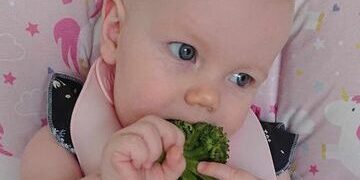
What can babies eat? As your baby reaches around 6 months old, you may have questions about what foods are safe and suitable for your baby. While there are generally no restrictions on the types of foods babies over six months can have, there are a few important considerations to keep in mind to ensure their safety and well-being. In this article, we will provide you with valuable insights and recommendations to help you navigate this exciting phase of your baby’s development and to find out what babies can eat. Read more about when to wean in our previous article
Honey and Choking Hazards
It is important to note that the NHS advises against giving honey to babies under 12 months due to the risk of botulism. Additionally, certain foods pose a choking hazard for children under three years of age. These include whole grapes, cherry tomatoes, raw carrot, apple, celery sticks, and nuts (which are a risk up to age five). It is crucial to be mindful of these foods and either avoid them or prepare them in a safe manner. Chopping grapes, cherry tomatoes and other fruit and veg into smaller pieces is recommended.
Salt and Sugar
When preparing your baby’s food, it is recommended to avoid adding salt. If your baby is eating food prepared for the whole family, consider setting aside their portion before seasoning. It is also best to refrain from adding sugar to your baby’s food and drinks.
Drinks
For babies under one year old, it is generally recommended to stick to human milk or formula milk, and water with meals. Cow’s milk can be used in cooking or mixed with other foods but is not suitable as a primary drink until your baby turns one year old. Avoid giving your baby squashes, fizzy drinks, flavored milk, or juice drinks due to their sugar and additive content. Citrus fruit juices can be introduced after six months but should be diluted with water. Tea and coffee are not suitable for babies or young children due to their caffeine content, which can reduce iron absorption.
Feeding Toddlers (1 year and up)
As your baby transitions into toddlerhood, it is normal for them to become more selective with their food choices. Offer your child a reasonable range of healthy foods and remain calm if they initially refuse certain options. Keep offering a variety of foods, as toddlers may eventually come back to eating them. Remember that it is your toddler’s natural development to become more independent and develop preferences. Avoid coercing or bribing toddlers to eat, as this can create an unhelpful dynamic around food and may set up negative associations around food and mealtimes. You can read more about this here with the Fussy Eating specialist we love Claire Potter
The Benefits of a Mixed Diet
A mixed diet, consisting of a wide variety of foods eaten in different combinations every day, is highly recommended. This type of diet ensures that your child receives all the necessary nutrients over time. By incorporating different food groups, such as meat or fish, beans, nuts, pulses, cheese, eggs, milk or yogurt, and fruits and vegetables, you can provide your toddler with a well-rounded and nutritious diet.
Individual Food Requirements
It’s important to note that your toddler’s diet doesn’t need to include every food conventionally considered good for them. A wide variety of foods can provide the necessary nutrients for their growth and development. For example, cow’s milk, which was once believed to be essential, is now recognized as a food that some children may be better off without. Remember that the value of any one food lies in the overall composition of nutrients it provides, and similar nutrients can be found in other foods.
Conclusion
As you embark on your baby’s weaning journey, keep in mind the safety guidelines and recommendations outlined in this blog post to work out what babies can eat. Consult with your health visitor for more information and stay updated with the official advice from the Food Standards Agency. Remember that providing a varied and balanced diet, while respecting your baby’s individual preferences, is key to promoting healthy eating habits and supporting their growth and development