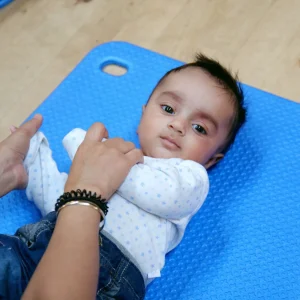

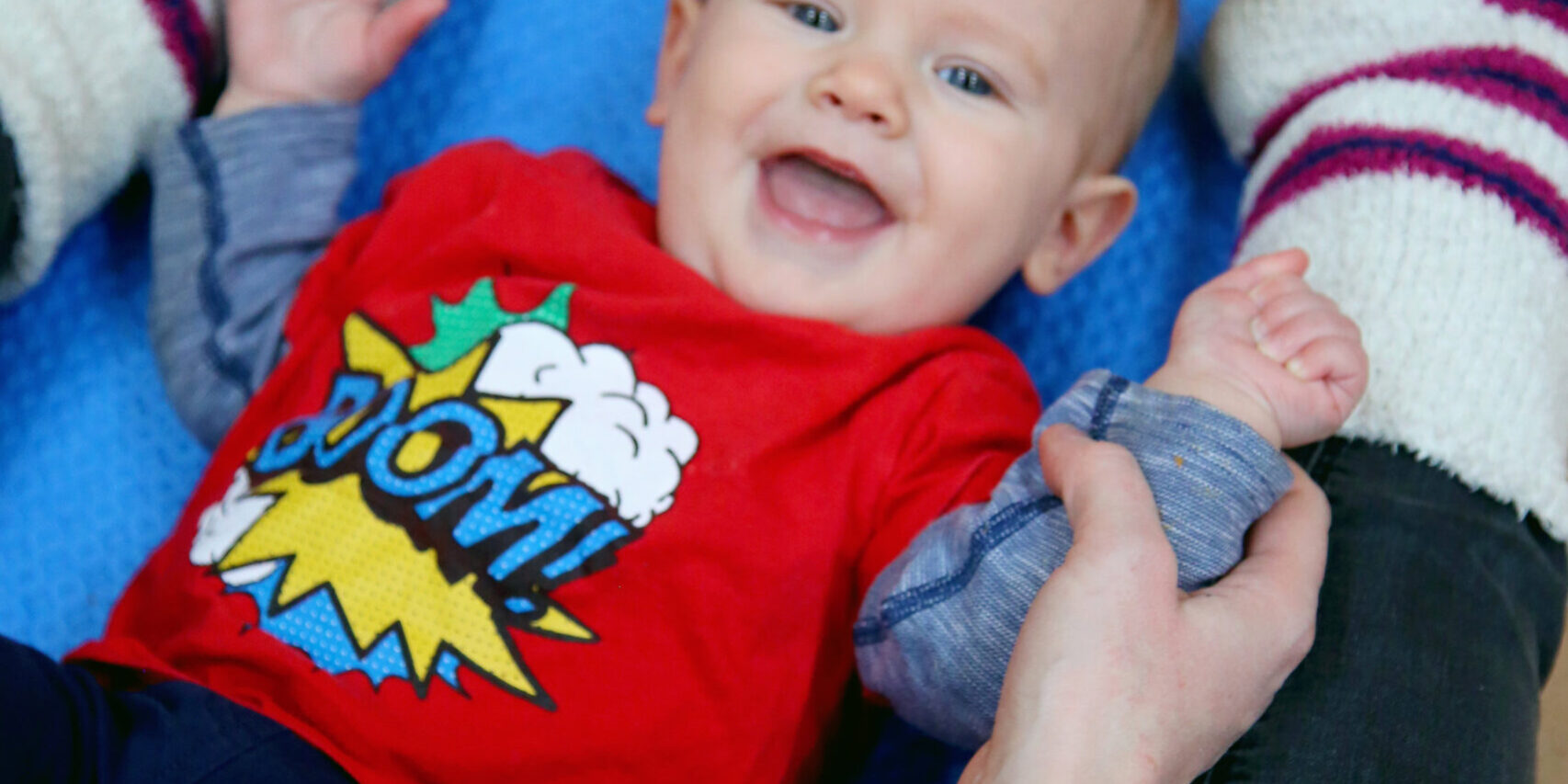
Babies are born with a mouldable brain that has only a few reflexive actions, but these are crucial in allowing them to survive until the cortical level of the brain develops. Reflex actions are an involuntary response to a particular stimulus and, in adults, they exist to keep us safe. For example, the reflex of pulling your hand away from something hot that would burn you. In newborns, these reflexes include a diverse range of functions; from helping the birth process to progress to helping an infant take their first steps.
Our Baby College programme has a core set of activities built in which focus on maximising your child’s neurodevelopment to maximise their learning capabilities now and later in life. This involves two aspects: the replacement of infant reflexes with adult responses and the development of essential balance skills.
The infant reflexes are the foundation of basic motor skills. They provide an innate response to key stimuli that facilitates a specific motor response to specific sensory stimuli. For example, the step reflex helps develop leg muscles and assists in the development of the nervous system so that it can coordinate walking when the child is older.
Babies are constantly wriggling, and the more a child moves, the better their control over movement becomes. Each wiggling of the toes, kicking of the legs, or reaching of the arms begins a process of modification. Nerve cells start to adapt and seek new pathways to different muscles. The changes in a cell become more definite and permanent with repetition. Increased control of movement is indicative of strengthening connections between the brain and the body and within the brain itself. In this way, movement helps to map the brain, and the reflexes provide a child with their earliest vocabulary of movement.
As the nervous system develops, however, the primitive reflexes are inhibited or transformed. They have fulfilled their function, and the persistence of these reflexes beyond their normal life may interfere with subsequent development. Sometimes they even re-emerge in adulthood following brain damage. This can be highly disabling and reflects the loss of the brain’s normal inhibition over these reflexes.
The following are some of the normal reflexes seen in newborn babies:
- Root reflex – helps the baby find the breast or bottle to begin feeding.
- Suck reflex – helps the baby become ready to suck.
- Moro reflex – seen when an infant is startled by a sudden noise or change in head position.
- Tonic neck reflex – resembles that of a professional fencer.
- Palmar Grasp reflex – stroking the palm of a baby’s hand causes the baby to close their fingers in a strong grasp.
- Babinski reflex – stroking the sole of the foot causes the big toe to flex downwards.
- Step reflex – a newborn who is held upright with their feet almost touching a hard surface, moves as if they are attempting to walk.
At Baby College, we use a specific set of natural, neurological and sensory exercises that encourage the process of modification and development of the nervous system. These are repeated in each class to help contribute to the correct development of the infant brain. They are imperative in the Infant and Toddler classes and are used to benefit the older children in the Junior classes and consolidate development milestones.
In class, Baby College encourages the development of the whole sensory system through a series of repetitive exercises. Why? Because that is how we create and strengthen connections in the brain, and it is how the brain develops. The Baby College programme is an excellent way to give your child a head start in life by helping to maximise their neurodevelopment.