

The different stages towards forming proper friendships
Written for Baby College by James Woodward, Durham University

1-2 months
Even from birth, babies are social creatures. As early as the first month, your baby may begin to experiment with making faces at you. Often this will be primarily attempting to mimic some of your gestures. This is known as interactional synchrony. This synchrony in actions helps establish infant relationships.
At 2 months, your baby will be much more receptive to what is going on around them and will spend a lot of their time watching their environments. They may also start to smile at you, as they learn to associate this with happiness, despite not fully understanding what they are doing.

3-6 months
These months are crucial in babies’ development. At around 4 months old, babies become much more social, as they become an expert at ‘smile talk’, which is starting a conversation with you by smiling and gurgling. They will also begin to show a preference towards human company than intimate objects, so spending a lot of time with them at this age will really help in developing a healthy relationship; however, the quality of this time is also extremely important.
As well as this, your baby will start to exhibit stranger anxiety at around 6 months and will be at their most enthusiastic when they are around mum or dad. This is a sure sign that you have bonded.
6-12 months
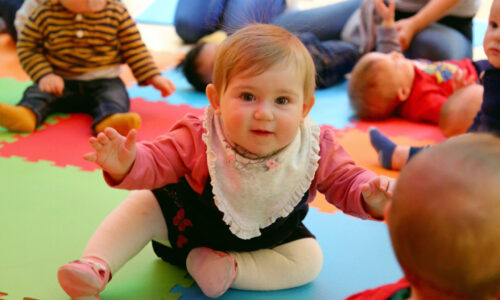
As your baby begins to be more comfortable moving around on their own, they may start to take an interest in other babies. They will happily play alongside each other and, every now and then, may smile and coo, and imitate each other’s sounds. However, for the most part they will not yet play together and so you or an older sibling will be your baby’s best playmate for some time yet.
Around 7 months, your baby may start exhibiting signs of separation anxiety. This is completely normal and means your baby likes it when you are there, and in time they will become more confident in exploring the world around with you at hand to reassure. This separation anxiety can appear at any time between 6-20 months but will most often peak at around 10-18 months old.
12 months+
After the first year, your baby will continue to become more interested in the world, but they will have an egocentric view. This means that they will be mainly concerned with how everything relates to them.
As your baby learns to talk and communicate, they’ll also learn how to make friends and will enjoy the company of other children but will still not yet play with them. They will be fiercely protective of their own toys, and will not yet understand how to share!
Like when they were younger, your child will still imitate you and your friends, and this continues as they learn to speak. Language is an essential part of socialisation.
By the age of 2-3, they will begin to understand their own emotions. They will improve at sharing and may even have one or two special friends they prefer over others.

Remember that all babies develop at different rates, these ages are not an absolute, and if your baby is not exhibiting the behaviours at the usual age, don’t worry and keep encouraging your baby and teaching them about social interactions!


